Ten Questions for Jazz Guitarist Ted Quinlan
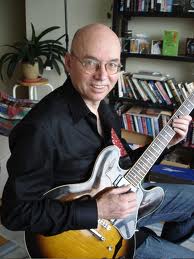
Hey everyone!!! The head of the guitar department at Canada’s best jazz school will be playing at The Jazz Room on Saturday Dec. 14, 2013 @ 8:30 to 11:30pm, cost is $16.00
And the best news of all is, he will be giving a workshop:
1. EQUIPMENT…..
I have a bunch of guitars and amps. My electric guitars are primarily Gibsons and Fenders and my amps are primarily old Fenders. Here’s a rundown:
I haven’t indicated the years that the guitars were made. None of them have any real vintage value and they were all made within the last 20 years or so.
Gibson ES-335 This is my main guitar, Gibson ES-175, Fender Stratocaster, Fender Telecaster, Steinberger Spirit -This is for traveling, Yamaha Silent Guitar-nylon sring, Taylor 514 c acoustic steel string, Hirade nylon string acoustic.
Amps:
1966 Fender Princeton Reverb, 1964 Fender Princeton Reverb, 1967 Fender Deluxe Reverb, 1978 Fender Vibrolux Reverb, Reissue Fender Twin Reverb, Fender Pro Junior, ZT Lunchbox Amp
I also have a couple of pedal boards that I use depending on the musical situation. They are:
Pedal Train Junior with these pedals:, Exotic EP Booster, Fulltone Fulldrive II- This is an overdrive pedal, Diamond Vibrato Pedal, Empress Tremolo, Ernie Ball Volume Pedal Junior, TC Electronics Nova Delay, Neunaber Stereo Wet Reverb,
Pedal Train Mini with these pedals:
Exotic EP Booster, Wampler Dual Fusion Overdrive, Boss FV 50 H Volume Pedal, MXR Carbon Copy delay, Neunaber Stereo Wet Reverb
2. EQUIPMENT THIS WEEKEND …..
I’ll definitely be playing the 335. I’ll probably use the Pedal Train Mini board through my 1966 Princeton Reverb.
3. TONE…..
My tone comes first from my hands. I play with a fairly light touch which I think helps to contribute to a more vocal sound from the guitar. I try to keep the volume of my picked notes roughly even with the volume of my slurred notes to give my lines a smoother sound. I also use a combination of alternate picking with hammer ons and pull offs to create different types of articulations and dynamic levels. I’ve worked a lot on fingerings that help me apply these techniques to the lines that I play.
Equipment is the other part of the equation. My strings are gauged 11to 49 and the action on my guitar is set so that it’s easy to play but doesn’t buzz. I use a Dunlop Ultex pick with a thickness of 1.14. I usually set the volume on my amps at around 4 so that they’re loud enough to be heard in a band but are still clean. I tend to roll off some of the tone on the guitar so I set the amps with the treble at about 5 and the bass on the low side, around 2. That way I feel like I can get the fatness from the guitar but still have a clear enough sound to cut through the band.
Effects are certainly a part of what I do and I try to use them tastefully. The most important ones for me are delay, reverb and overdrive. I like them because they all contribute to getting a more sustaining, horn like sound out of the guitar. I always use a volume pedal when I play with effects. I use it to create ambient sounds in conjunction with the other pedals and to make sure that, when I use overdrive, it’s at the right volume level.
4. ORIGINAL MUSIC….
My original music is a combination of all my influences and is an attempt to find my own way to play jazz. I always ask myself, what kind of chords would I like to play over or what groove would I enjoy? Chord changes are hugely important to me as are strong melodies. I don’t think that my material is that complicated, especially compared to a lot of contemporary jazz. In a way, my model is still pretty close to the idea of standard tunes but with more modern harmony and rhythm. I also like to bring in influences from pop and rock music.
5. STANDARDS…..
I love playing standards and work at them all the time. I think it’s important to spend a lot of time with a tune to really get inside it. I’m big on working with the melody and using it, as much as the changes, as a jumping off point for improvisation. I try to play compositionally and thematically and to pick tunes that I really love so that I’m inspired to play them. I like to get as loose as possible with a standard tune so that I feel free over the conventional harmony that makes up most of these tunes. The strong tonal nature of the American songbook can be an incredibly solid base from which to stretch the harmony and the melody. I think that my melodic sense is rooted in the bop tradition but I’ve tried to find my own lines and my own way to play it. Harmonically, I’m influenced heavily by piano players, particularly Bill Evans and by guitarists who are influenced by pianists such as Jim Hall and Ed Bickert. Ultimately, playing standards isn’t that different for me than playing original material except that there’s this huge legacy of who has played these tunes before you.
6. AUDITIONING TO HUMBER COLLEGE…..
Anyone who is planning on doing the Humber guitar audition should have a good look at the requirements, which are on the website. The technical aspect i.e. scales, arpeggios and chord forms should be nailed and sight reading should be at a decent level. Assuming those areas are covered, we’re looking for people who are musical and can play. Some knowledge of the jazz tradition makes a big difference in the audition. As well, the ability to play in time with a nice feel is very important.
7. PLEASE COMMENT ON YOUR COMPOSITION SPEAKEASY(available here http://www.kwjazzroom.com/event/workshop-with-ted-quinlan/?instance_id=486
Speakeasy is about as close as I get to writing a straight ahead tune. There are quite a few II-V’s which definitely relates to the jazz tradition. That said, there are some definite departures from that style of harmony, such as the four bars of Eb minor 7. I set that up as a little breather from all the chords flying by earlier in the tune and it is completely non functional harmony. After that there’s a sequence of chords that descends in thirds then the last two chords which are a tone apart, again non functional harmony. I’ve always liked tunes like Dolphin Dance by Herbie Hancock or Falling Grace by Steve Swallow. These tunes combine those two worlds in a way that sounds fresh to me and that’s what I tried to do with Speakeasy.
8. INFLUENCES……
My list of influences is way too long to list at this point but here are a few:
Everything by the Beatles
Disraeli Gears-Cream
Are You Experienced-Jimi Hendrix
Boss Guitar-Wes Montgomery
A Love Supreme-John Coltrane
Four and More-Miles Davis
Kind of Blue-Miles Davis
Sunday at the Village Vanguard-Bill Evans
Undercurrents-Bill Evans and Jim Hall
The Bridge-Sonny Rollins with Jim Hall
Pure Desmond- Paul Desmond with Ed Bickert
Jim Hall Live-with Don Thompson and Terry Clark
Bright Size Life-Pat Metheny
This list is far from complete but it gives you an idea of where I’m coming from.
9. TECHNIQUE….
I work on technique all the time but not in any sort of conventional way anymore. I seldom practice scales and arpeggios although I did a lot of that at one time and recommend it to students. I usually practice in the context of working on a tune. I’m entirely focussed on how I want my playing to sound and doing what ever is required to get it there. This can involve working with different kinds of lines and figuring out how to play them or working with chords and finding ways to incorporate them into my playing. I generally work with a metronome and am always trying to improve my time feel. I also record myself a lot when I practice…this is something that I feel is very useful and that I also recommend to students. Time and phrasing is everything and it can be very helpful to get some feedback on how those things are coming along.
10. WHAT TO EXPECT NEXT SATURDAY….
We’ll be doing a few new tunes next Saturday night as well as a bunch of tunes from the trio’s CD Streetscape. We’ll probably play a few standards too. I like to mix things up a bit both groove-wise and sonically so you’ll hear some different feels and I like to step on the overdrive pedal occasionally. Kieran and Ted are fantastic musicians and there are always surprises when we play together. It feels like having a stimulating conversation with old friends.
Stephen Zurakowsky
Artistic Director
Posted in: 10 Questions For....., THE K/W GUITAR SOCIETY

 Stephen Zurakowsky Classical Guitarist